Reviewing My First 4th of July Design
As a designer who has spent countless hours digitizing and stitching out holiday motifs, I approach every new machine embroidery design with a mix of curiosity and caution. The market is flooded with seasonal graphics, but few strike the right balance between whimsical charm and technical stitchability. Recently, I evaluated My First 4th of July. Independence Day, a piece that positions itself within the broader category of Illustrations and Graphics. My goal was not just to look at the preview images, but to determine how this design holds up when translated into thread on actual fabric. For Etsy sellers, craft business owners, and hobbyists, understanding this distinction is vital before committing to a project.
First Impressions and Visual Personality
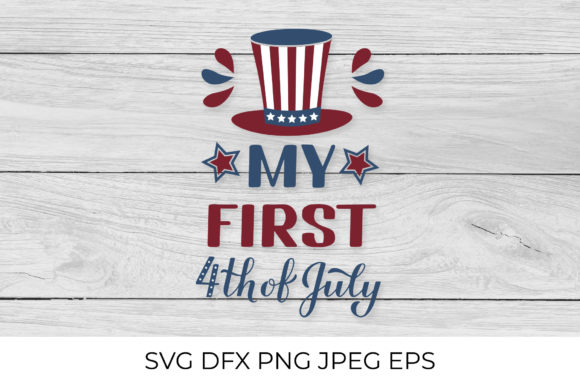
The immediate appeal of My First 4th of July. Independence Day lies in its playful typography. The lettering suggests a lighthearted, celebratory mood, perfectly suited for a baby’s milestone or a family’s first summer together. Unlike rigid, formal fonts, this design carries a hand-drawn quality that feels organic and warm. When viewing it as a digital asset, the lines appear clean, which is a promising sign for embroidery. However, visual appeal on a screen does not always guarantee success under the needle. The "funny Independence Day quote" aspect implies a casual tone, making it ideal for items that are meant to be worn comfortably rather than displayed formally.
In terms of layout, the design seems compact enough to fit standard hoop sizes, but the density of the lettering requires careful inspection. For a designer, the spacing between characters is critical. If the letters are too close, the satin stitch or fill stitch columns might merge, creating a bulky, unreadable mess. If they are too far apart, the design loses its cohesion. From my initial assessment, the spacing appears balanced, suggesting that the creator considered the physical limitations of thread expansion.
Real-World Application: The Baby Onesie Test
To truly evaluate My First 4th of July. Independence Day, I imagined applying it to a classic baby embroidery project: a soft cotton onesie. This is a high-stakes application because baby skin is sensitive, and parents prioritize comfort. A heavy, dense design can feel stiff and irritating. Here, the choice of stitch type becomes paramount. If this design relies heavily on dense fill stitches, it might be too rigid for a stretchy knit fabric. However, if it utilizes a combination of running stitch outlines and lighter fills, it could sit beautifully on the garment.
I also considered its use on a tote bag design. Canvas is forgiving and sturdy, allowing for higher stitch density without puckering. On a tote, this graphic would serve as a cheerful accent, perhaps paired with a small star or flag motif. The contrast of red, white, and blue threads against a natural beige canvas would highlight the lettering effectively. For custom apparel like adult t-shirts or sweatshirts, the design’s scale needs to be adjusted. What looks cute on a onesie might appear diminutive on a large hoodie. Scaling up requires checking the integrity of the curves and corners to ensure they do not become jagged or distorted.
Navigating Fabric and Technical Challenges
One must be realistic about where this design might struggle. Embroidery on textured fabrics, such as linen or waffle-knit towels, can obscure fine details. If My First 4th of July. Independence Day features thin serifs or intricate loops, these might get lost in the weave of a rougher material. In such cases, using a cut-away stabilizer is non-negotiable to provide a smooth foundation. Similarly, stitching on dark fabrics requires careful selection of thread colors. A white thread on black fabric might show gaps if the underlying fabric peeks through. Testing the design on scrap fabric of similar weight and color is a step no professional should skip.
Curved surfaces present another challenge. Applying this design to a cap or hat requires precise hooping and often a specialized backing. The curvature can distort the text, making it appear to arch unevenly. For embroidered patch creation, however, the design could shine. Patches allow for dense stitching on a stable base before being applied to the final garment, offering more control over the finished look. This makes the design versatile for those looking to create merchandise for a small shop product line.
Commercial Viability and Brand Consistency
For the Etsy seller or creative entrepreneur, the commercial potential of My First 4th of July. Independence Day depends on its uniqueness and execution. Holiday embroidery is a competitive niche. To stand out, the finished product must look professional. Sloppy stitching, thread breaks, or poor tension can undermine customer trust. This design, with its clear lettering, offers a good opportunity to showcase technical skill. It fits well into a broader collection of holiday embroidery items, helping to build brand consistency.
When creating printable mockup images for online listings, the clarity of the design allows for attractive presentations. Whether used on a mug via sublimation (using the provided PNG or JPEG files) or stitched onto a pillow cover, the visual identity remains strong. However, it is crucial to verify the licensing terms. While the product description mentions SVG, DXF, and EPS files suitable for cutting machines, using them for commercial embroidery projects may have different restrictions. Always confirm whether the license covers physical goods sold for profit.
Practical Designer Notes for Best Results
Before launching into production, consider these practical steps to ensure the best outcome with this digital embroidery file:
- Test on Scrap Fabric: Always stitch a sample on the same type of fabric you intend to use for the final product. This reveals issues with tension and density.
- Check Thread Contrast: Ensure your thread colors pop against the fabric. High contrast improves readability, especially for lettering.
- Review Stitch Density: If the design feels too stiff, consider reducing the density in your editing software if you have the appropriate tools and rights.
- Confirm Hoop Size: Measure the design dimensions against your machine’s hoop capabilities. Do not assume it fits without checking.
- Inspect Small Details: Zoom in on the digital file to check for tiny elements that might not stitch out cleanly. Simplify if necessary.
- Use Proper Stabilizer: Match the stabilizer to the fabric. Cut-away for knits, tear-away for woven cottons.
- Verify Licensing: Double-check the terms for selling finished items. Some licenses restrict commercial use or require attribution.
In conclusion, My First 4th of July. Independence Day offers a charming aesthetic that translates well to various handmade products. Its success, however, relies on the maker’s attention to detail. By respecting the technical requirements of embroidery and understanding the nuances of fabric behavior, designers can turn this graphic into a standout personalized gift or a best-selling item in their craft business. It is a solid choice for those looking to add a touch of patriotic whimsy to their summer collection, provided it is executed with care and precision.