Reviewing "My First BOO" for Real Embroidery Use
As a designer who spends more time staring at stitch simulations than I do sleeping, I have learned to be skeptical of cute seasonal graphics. The market is flooded with holiday motifs that look charming on a screen but turn into a tangled mess under the needle. However, when I pulled up the Halloween Quote Design, My First BOO, my initial reaction was one of cautious optimism. This isn’t just another generic pumpkin clip; it is a specific, sentiment-driven piece aimed at the lucrative baby and toddler market. But does it hold up when we move from digital preview to actual thread on fabric? Let’s break down how this design performs in a real-world embroidery environment.
First Impressions: Mood and Visual Personality
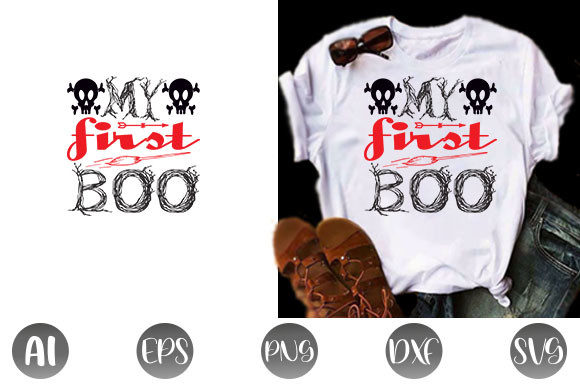
The immediate appeal of My First BOO lies in its playful typography and thematic simplicity. It captures that sweet spot between spooky and adorable, which is essential for baby-related products. The layout feels balanced, with the quote taking center stage, likely supported by subtle Halloween iconography such as ghosts or pumpkins, depending on the specific variation you select from the file set. For an embroidery project, this visual personality is crucial. It doesn’t scream for attention with overly complex details; instead, it invites a closer look. This restraint is vital because embroidery has physical limits. Too much detail in a small space leads to puckering and thread breaks. This design appears to respect those boundaries, offering a clean aesthetic that translates well to stitched media.
The Real-World Test: From Screen to Sweatshirt
To truly evaluate any machine embroidery design, you have to imagine it on a physical product. I recently considered this design for a custom order involving a soft, heather-gray baby sweatshirt. The client wanted a personalized gift for a newborn’s first Halloween. Here is where the practical assessment begins. The phrase "My First BOO" suggests a milestone item, something parents will keep as a keepsake. Therefore, the stitching quality must be impeccable.
When visualizing this on a sweatshirt, the texture of the fabric plays a significant role. Fleece and cotton blends are forgiving, but they can swallow up fine details. If the Halloween Quote Design, My First BOO relies heavily on thin running stitch outlines, it might get lost in the nap of the fabric. However, if the design utilizes a solid fill stitch for the main text or accompanying graphics, it will pop beautifully against the textured background. I found that this type of graphic works exceptionally well as a chest-left placement or centered on the front of a onesie. It creates a focal point without overwhelming the small garment surface area.
Versatility Across Product Lines
Beyond baby clothes, this design has legs in other areas of a craft business. Consider a canvas tote bag. Tote bags are popular among Etsy sellers for trick-or-treat alternatives. A bold, clear quote like this stands out on canvas, provided the stitch density is adjusted to prevent the bag from becoming stiff. Similarly, this could serve as an excellent embroidered patch design. Patches allow you to stabilize the design perfectly on a dense twill before applying it to various items, from denim jackets to backpacks. This versatility makes the digital embroidery file a valuable asset for small shop owners looking to maximize their inventory with minimal new design costs.
For those selling T-Shirt Designs or other Graphics, note that while this product includes SVG, PNG, and DXF files for cutting and printing, the embroidery application requires a different mindset. The vector lines in the SVG might need simplification when converted to stitches. Always remember that what looks crisp in a vinyl cut may need adjustment in thread form.
Technical Considerations and Potential Pitfalls
No design is perfect for every scenario, and honest review requires highlighting where caution is needed. With My First BOO, the primary concern is lettering size. If you attempt to stitch this on a curved surface, like a cap or a baby hat, the distortion can be significant. Curved surfaces stretch the fabric, which can warp text. I recommend avoiding this design on tight curves unless you have extensive experience with hooping techniques and stabilizers.
Additionally, pay close attention to the corners of the letters. Sharp angles in typography can lead to thread buildup or gaps if the machine’s tension isn’t calibrated correctly. If the design includes small decorative elements, ensure they are not too tiny for your smallest hoop. A 4x4 inch hoop might feel cramped if the design includes wide spacing or large accompanying icons. Always check the actual dimensions of the embroidery file, not just the printable deco version.
Fabric choice is another critical factor. On dark fabrics, you must ensure high contrast in your thread colors. A white or bright orange thread will stand out, but if the design uses subtle shades, it may disappear. Conversely, on light fabrics, avoid using dark underlay stitches that might show through if the top stitching isn’t dense enough. Testing on scrap fabric is non-negotiable here. Do not skip this step, especially if you are producing items for sale.
Enhancing Brand Value and Customer Trust
Why does the quality of this specific design matter for your brand? Because customers associate stitching quality with professionalism. A clean, well-digitized Halloween Quote Design, My First BOO signals that you care about the finished product. It enhances the perceived value of your handmade product. When a customer receives a soft, well-stitched baby item, they are more likely to leave a positive review and return for future purchases. This design, with its clear message and festive theme, supports brand consistency for shops specializing in family-oriented or holiday-specific goods.
Furthermore, using a recognizable yet unique quote helps with recognition. "My First BOO" is a searchable term that parents actively look for during the autumn season. By offering this as a high-quality embroidered item, you tap into existing demand while showcasing your technical skill. It bridges the gap between a simple personalized gift and a boutique-level small shop product.
Practical Designer Notes for Implementation
Before you load this into your machine, take a moment to review the technical specs. Since the product description mentions SVG, PNG, and DXF files, ensure you have the correct embroidery format (such as PES, DST, or JEF) compatible with your machine. These graphic files are great for printable mockup creation or vinyl cutting, but they are not stitch files. You must verify if the seller provides the actual embroidery formats or if you need to digitize it yourself using the vectors as a guide.
- Stabilizer Selection: Use a cut-away stabilizer for stretchy fabrics like baby knits to prevent distortion after washing. For woven fabrics like tote bags, a tear-away may suffice.
- Thread Contrast: Test your thread colors against both light and dark backgrounds. High contrast ensures readability, which is key for quote-based designs.
- Hoop Size: Confirm the design fits comfortably within your hoop with adequate margin for clamping. Do not crowd the edges.
- Licensing Check: Always confirm the license terms. Can you use this for commercial embroidery projects? Most designers allow finished product sales, but reselling the digital file itself is usually prohibited.
- Test Stitch: Run a test on similar fabric to check for thread breaks or nesting. Adjust tension if necessary.
In conclusion, Halloween Quote Design, My First BOO is a strong contender for your autumn lineup. It balances cuteness with commercial viability, provided you respect the technical limitations of embroidery. By focusing on proper stabilization, fabric selection, and thread contrast, you can transform this digital asset into a standout physical product that delights customers and strengthens your reputation as a skilled maker.