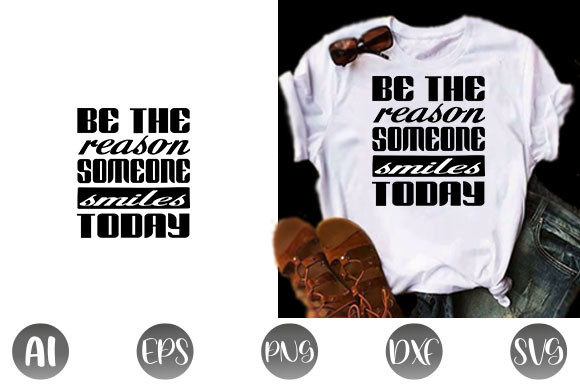
Review: Be the Reason Someone Smiles Embroidery Design
As a designer who spends more time staring at stitch simulations than I care to admit, I have developed a sharp eye for what translates well from screen to fabric. Typography-based designs are notoriously tricky in embroidery. A font that looks elegant on a monitor can turn into a tangled mess of thread breaks and puckering if the digitizing isn’t precise. Recently, I evaluated the Kindness Quote Design, Be the Reason Som to see if it holds up under the needle. This isn’t just about aesthetics; it is about functionality for real-world projects.
The phrase "Be the reason someone smiles today" carries a warm, uplifting mood. It is the kind of message that resonates deeply in the current market, where consumers are increasingly drawn to mindful, positive messaging in their everyday items. Visually, the layout feels balanced. The typography appears approachable, avoiding overly ornate serifs that often cause issues with small hoop sizes. For an embroidery project, this visual personality suggests versatility. It does not scream for attention with aggressive graphics but rather invites a closer look, making it ideal for personalized gifts and boutique branding.
Real-World Application: The Tote Bag Test
To truly understand the value of this design, I imagined applying it to a custom embroidered tote bag. Canvas is a forgiving fabric, but it has a distinct texture that can swallow fine details. When I reviewed the file structure, I considered how the lines would interact with the weave of a heavy cotton canvas. The design’s simplicity works in its favor here. Complex fill stitches can sometimes distort on textured fabrics, but a well-digitized quote like this relies on clean paths.
If you are an Etsy seller or a small shop owner, this type of design is a staple. It fits seamlessly into the category of T-Shirt Designs and Graphics, yet its application extends far beyond apparel. Imagine this stitched onto a natural linen apron for a local bakery or a sturdy denim patch for a workshop jacket. The emotional connection of the quote enhances the perceived value of the handmade product. Customers are not just buying a bag; they are buying a reminder to be kind. That emotional layer is what drives buyer engagement and brand loyalty.
Stitching Performance and Fabric Considerations
When preparing any machine embroidery design for production, the choice of fabric dictates the success of the finished product. I analyzed how this design would perform on various materials. For sweatshirt embroidery, the loft of the fleece requires careful attention to stitch density. If the digitizing is too dense, the fabric will pucker around the letters. If it is too light, the underlying fabric color might show through, reducing readability. Since the ZIP file contains EPS, SVG, PNG, and DXF files, it is primarily marketed for cut machines and scrapbooking, which implies the vector paths are clean. However, for embroidery, you must ensure the digitized version (if converted or if an embroidery-specific file is provided separately) uses appropriate underlay stitches.
For baby embroidery, such as on a onesie or a soft blanket, the hand-feel is critical. No parent wants a scratchy patch of thread on their infant’s skin. This design, with its likely reliance on running stitch or light satin stitch borders, could work well if scaled appropriately. You must check the stitch count and density. A heavy fill stitch would be uncomfortable and stiff. Always test the design on scrap fabric first. This is non-negotiable professional advice. What looks perfect on your screen might pull excessively on thin, stretchy fabrics.
Dark fabrics present another challenge. Thread colors must contrast sharply to maintain legibility. If you are stitching this on a navy hoodie, a bright white or pastel yellow thread will pop, whereas a muted gray might get lost. I recommend testing your thread color combinations in black and white mockups before committing to the final piece. This helps you verify that the design’s shape remains distinct even without color cues.
Navigating Technical Constraints
While the sentiment is universal, the technical execution requires precision. There are specific scenarios where you should use this design carefully. Small hoop sizes, such as 4x4 inches, may require you to scale down the text. Be cautious here. Tiny lettering can become illegible if the stitches merge. Inspect small details closely in your software. If the dots on the "i"s or the crosses on the "t"s are too small, they may not stitch out cleanly, leading to frequent thread breaks or messy jumps.
Curved surfaces, like caps or hats, introduce distortion. Embroidering on a curved brim requires proper stabilization and often a different digitizing approach than flat embroidery. If you plan to use this for cap embroidery, ensure the design is centered and that the stabilizer you use is cut-away rather than tear-away to provide long-term support. Layered garments also pose a risk. Stitching through a thick seam or a pocket edge can cause needle deflection, ruining the alignment of the quote.
Since the product description highlights use for cut machines and scrapbooking, it is vital to clarify the file usage. The included SVG and DXF files are excellent for vinyl cutting or paper crafts. However, for machine embroidery, you need a specific embroidery file format (like PES, DST, or JEF) unless you are manually digitizing from the vector files. If you are not a digitizer, confirm whether an embroidery-ready file is included or if you are purchasing these graphics for hybrid projects. Never assume compatibility. Check the license terms explicitly before selling finished items or digital products. Commercial embroidery rights vary, and protecting your craft business from legal issues is as important as the stitching itself.
Enhancing Brand Value and Customer Trust
From a business perspective, the quality of your design assets reflects directly on your brand consistency. Using a clean, well-thought-out quote like Kindness Quote Design, Be the Reason Som signals professionalism. It shows that you care about the message and the medium. For holiday embroidery or wedding gifts, this design offers a timeless appeal. It does not rely on trending slang or fleeting fads, which means it has a longer shelf life in your portfolio.
When creating printable mockups for your online store, ensure the visualization matches the reality of the stitched product. Misleading images lead to returns and negative reviews. Show the texture of the thread. Highlight the dimensionality of the satin stitch or the subtle texture of a fill stitch. This transparency builds customer trust. Buyers appreciate knowing exactly what they are getting, especially when ordering personalized gifts.
In conclusion, this design serves as a strong foundation for various creative entrepreneurs. Whether you are making a single personalized gift or stocking inventory for a craft fair, the key lies in the preparation. Respect the fabric, choose the right stabilizer, and test your tension. By treating the Kindness Quote Design, Be the Reason Som with the technical respect it deserves, you transform a simple digital file into a tangible object that spreads joy. That is the true power of embroidery: turning threads into meaning.